
Hoffman Estates Address History Sources
A backward address search works best when the source matches the era. Most Hoffman Estates parcels are in Cook County, but a small western portion is in Kane County. Confirm that boundary first. The county choice controls the assessor, recorder, court, and archive that can answer the request. The following coverage guide separates legal ownership from evidence that a household actually lived there.
| Source | Years It Covers | Where Held | What It Shows |
|---|---|---|---|
| Cook recording history | 1871-present; strongest digital access from 1985 | Cook CRS and archives | Deeds, liens, mortgages, legal descriptions |
| Kane land records | 1837-present | Kane LRS and research room | Recorded transfers and title instruments |
| Telephone directories | Scattered 1936-1959; gap to 1981/82; runs 1982-2016 | Schaumburg Township District Library | Names, numbers, addresses by edition |
| Haines criss-cross | 2010-present as listed | Library | Address-to-name reverse entries |
| Hoffman herald | 1959-1969 | ALPLM microfilm | Notices, local names, old addresses |
| Federal census | Public through 1950 | NARA and library resources | Pre-village household snapshots |
The library holdings account helps identify an edition. Missing years are evidence of a collection gap, not proof that a resident left Hoffman Estates.
Fix the Hoffman Estates Parcel
Record the current spelling, unit, county, parcel identification number, and legal description before searching a person. CookViewer or KaneGIS4 can locate land even when a tax mailing address differs from the street address. A parcel identification number, or PIN, is the county key for a piece of land. The legal description identifies its surveyed lot, block, and subdivision, so it can survive a street rename.
Use CookViewer for a Cook parcel or KaneGIS4 for the Kane portion. Then open the matching assessor card. A taxpayer name and mailing line create a current lead, but neither proves occupancy. A homestead exemption may suggest owner occupancy in a tax year, yet it does not list everyone in the household.
Note: Save the map date, PIN, and tax year with each finding so later updates do not erase the research trail.
Reverse the Hoffman Estates Deeds
The title chain links one recorded owner to the owner before them. Start with the newest deed. Cook County's Clerk's Recordings System is strongest online from 1985 forward, while its recording history reaches 1871. Kane County's land-record portal covers records dating to 1837 and offers research-room help.
- Take the PIN, legal description, and current owner from the assessor card.
- Find the latest deed and note the grantor, grantee, dates, and document number.
- Search that grantor as an earlier grantee to find the prior purchase.
- Check mortgages, releases, corrections, trusts, and death instruments so a refinance is not mistaken for a sale.
- Repeat until online coverage ends, then ask for microfilm, deed books, or archive help.
- Grantor
- The party transferring an interest.
- Grantee
- The party receiving that interest.
- Chain of title
- The linked series of recorded transfers.
- Legal description
- The surveyed land description used when street labels change.
A deed fixes legal ownership at a recorded point. Closing, possession, and move-in can have different dates. Renters and other household members may never appear in the chain.
Previous Residents Before Digital Deeds
A blank Cook CRS result may describe access, not history. Earlier instruments can sit in books, microfilm, duplicate reels, offsite holdings, or archival workflows. The Great Chicago Fire also shaped the earliest county title landscape. Ask the Cook County Clerk or Cook County Archives for a named series, date span, PIN, subdivision, or legal description, rather than asking for every record about an address.
Kane County has a separate timeline and office. Its recorder advertises records back to 1837 and six public research computers at 719 S. Batavia Avenue, Building C, Geneva. In either county, an index line is not the certified instrument. Images and certification can carry fees even when the first index search is free.
Convert 1978 Hoffman Estates Addresses
Hoffman Estates changed roughly 6,000 addresses and affected 92 street names or segments in 1978. Ordinance 1017-1978 was signed June 19, and the unified grid took effect August 1. Four older grids and nonconforming cul-de-sacs were replaced by one system tied to Schaumburg. A directory, deed, and newspaper can therefore describe the same household with different address forms.
Local examples are concrete: Kingman became Kankakee across Illinois Boulevard, and Maywood became Maricopa. Build an old-to-new conversion note before opening a pre-1978 volume. Search both forms, plus subdivision and lot. The library's renumbering history explains what a current parcel portal cannot.
Address trap. A failed current-address search in a 1969 source is expected until the old street name and number are identified.
Bridge Hoffman Estates Directory Gaps
The library lists useful regional phone books before 1960 and from 1982 onward, but the local run has a large 1960-1981/82 gap. A donated 15-page 1969 Hoffman Estates Residence & Business Directory is a rare snapshot from inside that gap and before renumbering. Its observed business lines preserve old address vocabulary, though no public residential scan was found. Ask the reference desk for a supervised surname or address lookup.
Fill missing years with independent anchors. The Hoffman herald spans 1959-1969 on microfilm. School yearbooks include Hoffman Estates Halycon volumes from 1974 and many later years. Permits, plats, church records, probate, and obituaries can bridge more of the timeline. Silence in one directory never establishes a move date.
Read a Hoffman Estates Parcel Card
A real card shows why fields must stay separate. Open the sample Hoffman Estates parcel record before comparing ownership, situs, sales, permit, and tax-year details.
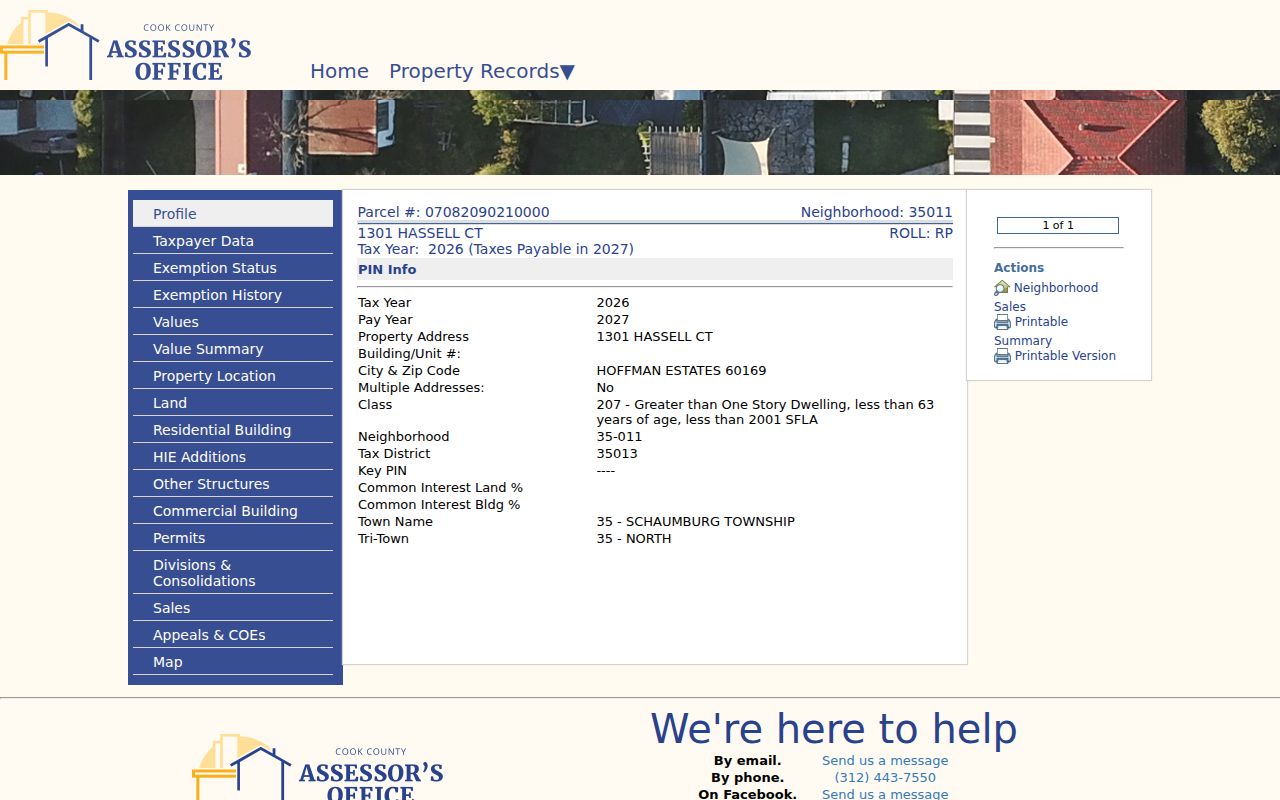
Use its PIN and legal description to control the next search. Keep taxpayer names, mailing addresses, and sales labeled as property evidence rather than a resident roster.
Date Hoffman Estates Property Changes
Building permits can place an addition, deck, utility job, demolition, or other physical change on the timeline. Hoffman Estates moved current enterprise services to BS&A on January 26, 2026, while CentralSquare and eTRAKiT remain part of the legacy trail. The Village has not published one complete start date for every permit series. Search the current system, preserve any legacy hit, then send a specific Illinois FOIA request to the Village Clerk when a record is absent.
A permit applicant or contractor is not necessarily an owner or resident. Use the permit to date work, then test a name against a deed, directory, or dated news item. Fire Prevention records may supply another physical clue. Utility customer lists are not a public resident source.
Confirm Hoffman Estates Past Households
Ownership is only half of previous-resident research. A criss-cross directory starts with an address and returns the listed subscriber for that edition. The library lists Haines Chicago Near North Suburban Criss-Cross directories from 2010 forward. Older books may list a name, number, and address, but their conventions differ. The collection itself is detailed on the Hoffman Estates city directories page.
For an early property, pair the public 1950 census with township, plat, church, and farm references. Hoffman Estates incorporated in 1959 after the first postwar homeowners arrived in late 1955, so earlier households may be indexed under Schaumburg Township. Yearbooks and newspaper notices can distinguish residents who share a surname.
Close the trail carefully. An obituary can identify relatives and a last residence. Probate may connect an owner, executor, heir, and property. Vital records have age, relationship, identification, and purpose limits. Request the actual file from the Cook or Kane custodian instead of treating an index as the whole record.
Lawful use. Research previous residents for house history, genealogy, or personal curiosity. Never use an address trail to watch, harass, or harm anyone.
Inspect the Hoffman Estates Deed Index
Cook County search guidance emphasizes PIN, address, party role, document type, date, and legal-description routes. The official recorded-document guide shows how to reach the index and copy process.
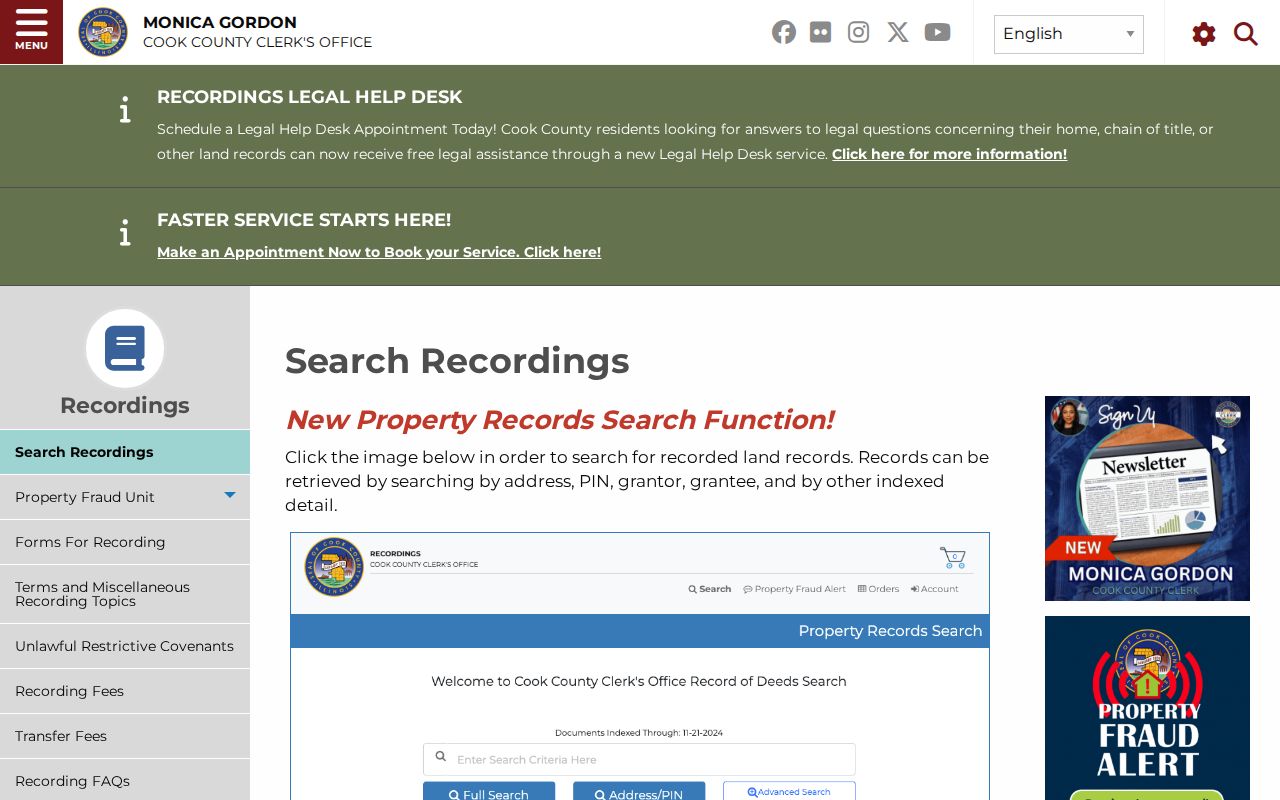
Log each document number, date, party role, PIN, and associated instrument. That record makes corrections and non-sale filings clear and prevents a jump between two people who share a name.